Hermetic material appears in the Mystery Babylon series at four points that look unrelated until you know what Hermeticism is. It is in the bibliography episode MB17, where Cooper recommends a book on Hermetic science. It is in MB30, in a passage on sun worship surviving in Gnosticism and Hermetic philosophy. It is central to MB34, where the Emerald Tablet is discussed directly. And it runs through the Rose Cross arc, particularly MB37. This page sets out what the material actually is.
This page documents the historical record. It is background for listeners of the Mystery Babylon series, not an endorsement of the series’ interpretation of it. Where the broadcasts and mainstream scholarship diverge, that divergence is stated plainly. For the series itself, start with the complete episode guide.
What Hermeticism Is
Hermeticism is a body of Greek philosophical and religious writing produced in Egypt under Roman rule, roughly the first to third centuries AD, attributed to a figure called Hermes Trismegistus, meaning Hermes the thrice-great. The name fuses the Greek Hermes with the Egyptian Thoth, god of writing and wisdom.
The principal collection is the Corpus Hermeticum, seventeen or eighteen treatises depending on the edition, mostly in dialogue form. Its themes are the ascent of the soul, knowledge of the divine as a path to regeneration, and correspondence between the cosmos and the human being. A separate and important text, the Asclepius, survives in Latin.
A crucial fact of intellectual history attaches to these texts. When they were brought to Florence and translated by Marsilio Ficino in 1463, Renaissance readers believed them to be Egyptian writings older than Moses, and that belief drove an enormous revival. In 1614 the philologist Isaac Casaubon demonstrated on linguistic grounds that they were composed in the Roman period, not in remote antiquity. That dating is now settled. The Renaissance enthusiasm, and much of what followed from it, rested on a mistake about the age of the texts.
The Emerald Tablet
The Emerald Tablet is a separate and much shorter text, a few sentences long, best known for the formula usually rendered as that which is above is like that which is below. MB34 gives its transmission history accurately: the first published version dates from an Arabic source of the eighth century AD, and it was not translated into Latin in Europe until the thirteenth century. That is the scholarly account, and the episode states it correctly.
The tablet became foundational to European alchemy, and the correspondence formula became one of the most widely quoted lines in Western esotericism, which is why it recurs in Rosicrucian and Masonic material centuries later.
How the Series Uses It
MB34 places Hermetic wisdom in a chain: it states that the myth of the Hermetic wisdom had a profound effect on the Gnostics, described there as heretical Christians in conflict with the early church for attempting to fuse paganism with the new Christian faith, who claimed to possess secret teachings of Jesus given only to an inner circle, and that Masons claim these teachings. That is the transmission argument in compressed form, and it is the same argument the lineage chart maps.
MB30 uses Hermeticism more narrowly, in a quoted passage arguing that the use of the north as a symbol of darkness is a portion of old sun worship of which relics are found in Gnosticism and in Hermetic philosophy. That is a comparative observation rather than a claim of institutional descent, and it is the more defensible of the two uses.
MB37 reads from a mid-twentieth-century Rosicrucian publication whose title page lists a stack of merged orders including a Hermetic Brotherhood. That listing is a genuine artefact of the twentieth-century American esoteric scene, in which small orders combined and recombined under grand titles, and it is worth reading as evidence about that scene rather than about antiquity.
MB17 simply recommends a book, A.S. Raleigh’s Occult Geometry and Hermetic Science of Motion and Number, in the context of Cooper telling listeners that once you get into the symbology of the mystery schools, geometry and Hermetic science become important.
Where the Series and Scholarship Diverge
The historical facts about the texts are not in dispute and the series reports several of them correctly. The divergence is over what the survival of Hermetic ideas indicates.
Historians of esotericism describe a real and traceable transmission: Hellenistic Egypt to Arabic translators to medieval Latin Europe to the Renaissance revival to early modern alchemy to the Rosicrucian manifestos to nineteenth-century occultism. That is a documented literary lineage, and the Rosicrucians hub follows part of it. What that account does not include is an unbroken initiatory institution carrying the material from ancient Egypt to the present. The texts travelled. The evidence for an organisation travelling with them is what the series asserts and academic history does not find.
The Casaubon dating matters here more than anywhere else in this subject. If the Hermetic texts are Roman-period Greek philosophy rather than primeval Egyptian revelation, then the resemblance between Hermetic and later Egyptian-flavoured esotericism is explained by the texts themselves being a Greek reading of Egypt, which is a much shorter and better-evidenced chain.
For the Gnostic material, see Gnosticism and the Nag Hammadi library. For the Rose Cross arc, see the Rosicrucians hub and study guide arc 5.
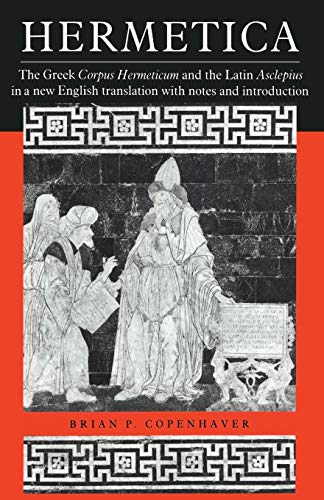
Every book recommended across this series is collected, with a note on what each one is actually good for, on the Top Picks reading list.
