MB32: Letter by a Humanist Police Chief engages with organised humanism, a subject where the primary documents are short, public, and frequently characterised rather than quoted. The two Humanist Manifestos run to a few pages each, name their signatories, and are freely available. Anyone can read them in a single sitting, which makes this one of the easiest claims in the series to check independently. This page sets out what the documents contain.
This page documents the historical record. It is background for listeners of the Mystery Babylon series, not an endorsement of the series’ interpretation of it. Where the broadcasts and mainstream scholarship diverge, that divergence is stated plainly. For the series itself, start with the complete episode guide.
The 1933 Manifesto
The first Humanist Manifesto appeared in the May/June 1933 issue of The New Humanist and was reported in the press on 1 May. Its text is attributed principally to Raymond Bragg, then secretary of the Western Unitarian Conference, and the philosopher Roy Wood Sellars of the University of Michigan. Of the 65 people asked to sign, 34 did. The signatories were mostly academics and clergy of liberal denominations, and the best-known among them was the educational philosopher John Dewey, whose involvement is the single fact about the document most often cited, usually in connection with his influence on American schooling.
The document consists of fifteen numbered affirmations. Its central moves are these. The universe is self-existing and not created. Human beings are a product of a continuous natural process, and the traditional dualism of mind and body must be rejected. Religion is a human cultural product and its forms are shaped by the societies that produce them, so a religion adequate to the modern age must be reconstructed in the light of science. Supernaturalism and cosmic guarantees are set aside, and the traditional religious emphasis on personal salvation and otherworldly hope is replaced by a this-worldly concern with human welfare. The eighth affirmation names “the complete realization of human personality” as the end of human life. The fourteenth, the most contested even among humanists, calls “existing acquisitive and profit-motivated society” inadequate and demands “a socialized and cooperative economic order” so that “the equitable distribution of the means of life” becomes possible.
One feature of the 1933 text repays attention because it cuts against how the document is usually characterised in both directions. It presents itself as religious. It speaks of religious humanism, of a new religion adequate to the times, and the signatory list is full of ministers. It is not an atheist manifesto in the modern sense of rejecting religion as such; it proposes replacing supernatural religion with a naturalistic one, which is a different and more specific claim. Critics who describe it as a religion are quoting it correctly. So are critics who describe it as denying God, since it does. Both are in the text.
The 1973 Sequel
Humanist Manifesto II appeared in 1973, drafted by Paul Kurtz and Edwin H. Wilson, and it is a substantially different document in tone and length. Its preface says that events in the forty years since 1933 “make that earlier statement seem far too optimistic”, and it lists them: “Nazism has shown the depths of brutality of which humanity is capable”, other totalitarian regimes have suppressed human rights, science “has sometimes brought evil as well as good”, and “inhuman wars can be made in the name of peace”.
The 1973 text is longer, set out as seventeen numbered principles grouped under six headings, and considerably more specific in its policy content. It affirms the separation of church and state, civil liberties and the right to dissent, the elimination of discrimination based on race, religion, sex, age or national origin, and a set of positions on personal freedoms including sexual conduct, divorce, contraception, abortion and the right to end one’s own life. In international affairs it proposes “to transcend the limits of national sovereignty” and looks to “a system of world law and a world order based upon transnational federal government”, calls for reduced military spending, and for cooperative planetary management of resources and population.
Those internationalist sections are the ones that recur most often in the conspiracy literature, and it should be said plainly that the passages exist and say roughly what they are quoted as saying. The document does advocate moving beyond the nation-state toward world community and does treat that as a moral requirement. The interpretive question, as elsewhere in this subject, is whether a signed public manifesto by a philosophical association constitutes evidence of a directing plan or evidence of a published opinion. It is unambiguous evidence of the latter. It is the further step that is contested.
A third document, Humanism and Its Aspirations, followed in 2003, shorter and less programmatic than either predecessor.
Reading the Documents Instead of the Quotations
Because both manifestos are short and public, three checks will resolve most disputes about them. Note which document a given quotation comes from, since the 1933 and 1973 texts are routinely conflated and differ substantially. Read the affirmation whole rather than the clause, since several of the most-quoted lines are qualified in their second half. And check the signatory list against claims about who endorsed what, since the lists are published. Eleven of the 34 original signers, among them Bragg, Sellars and Wilson, also signed the 1973 document, alongside more than a hundred new names. John Dewey, who died in 1952, is not among them.
It is also worth distinguishing organised humanism from secularism at large. The manifestos are the products of a specific and rather small associational movement, the American Humanist Association and its predecessors. Treating them as the charter of every secular institution in the twentieth century attributes to a few dozen signatories an influence the documents themselves cannot demonstrate, however congenial their contents may have been to broader currents already under way.
Where the Series and Scholarship Diverge
The series’ framework treats organised humanism as one visible institutional face of a longer project: the displacement of revealed religion by a man-centred substitute, connected to the Luciferian doctrine material and to the ecumenical themes of MB07, and reaching into education and public administration through signatories such as Dewey.
Intellectual historians read the manifestos as period documents of American liberal religion and progressive philosophy: the 1933 text as an artefact of Depression-era Unitarian and pragmatist circles attempting to salvage religion’s social function without its metaphysics, the 1973 text as a post-war revision chastened by the intervening catastrophes and sharpened into policy advocacy. On that reading the documents record what a particular milieu believed and published, and the influence of that milieu on schooling and law is a matter for ordinary historical argument rather than evidence of coordination.
What makes this a good subject for a listener to work on is that the gap between the two readings is narrow and the evidence is two short documents. For the surrounding material see the series timeline and the full bibliography.
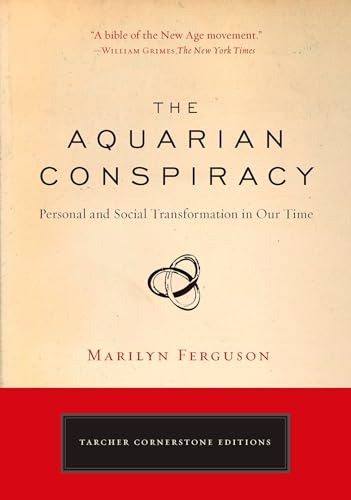
Every book recommended across this series is collected, with a note on what each one is actually good for, on the Top Picks reading list.
Sources for This Page
The quotations above are checked against the published texts of both manifestos, and the signatory counts against their printed lists.
| Source | Status | Where to find it |
|---|---|---|
| A Humanist Manifesto (1933). The fifteen affirmations and the list of 34 signers with their affiliations as printed. | Full text, published by the American Humanist Association | Humanist Manifesto I |
| Humanist Manifesto II (1973), by Paul Kurtz and Edwin H. Wilson. The preface quoted above, the seventeen principles, and the signatory lists. | Full text, published by the American Humanist Association | Humanist Manifesto II |
| "Humanist Manifesto I." The May/June 1933 issue of The New Humanist, the 1 May press release, and the 65 people asked to sign. | Encyclopedia article (secondary) | Wikipedia |
| "Humanist Manifesto." Authorship of the 1933 text attributed principally to Sellars and Bragg, and Humanism and Its Aspirations (2003). | Encyclopedia article (secondary) | Wikipedia |
| "John Dewey." His death on 1 June 1952. | Encyclopedia article (secondary) | Wikipedia |
| Mystery Babylon broadcasts MB07 "Ecumenism" (22 February 1993) and MB32 "Letter by a Humanist Police Chief" (3 January 1994), dated by their file names in the series archive. | Audio archive | Internet Archive |
