The reverse of the Great Seal, with its unfinished pyramid and hovering eye, is the most reproduced image in this entire subject area. The Mystery Babylon series returns to it repeatedly: in MB01 on the missing capstone, in MB04 on the eye as the eye of Horus, in MB13 on the Latin mottoes, and in MB19, where an entire Rosicrucian text on the seal’s mystic significance is read on air. The design record is public, which makes this checkable.
This page documents the historical record. It is background for listeners of the Mystery Babylon series, not an endorsement of the series’ interpretation of it. Where the broadcasts and mainstream scholarship diverge, that divergence is stated plainly. For the series itself, start with the complete episode guide.
What the Series Claims
MB01 states that the secret of the truncated pyramid missing the capstone on the reverse of the Great Seal is that in the mystery religion the Master Mason is the cornerstone or peak of the pyramid, the illumined man who functions as the eye of Horus, the spy for the mystery schools.
MB04 identifies the eye directly, describing an order of priests under the collective title of Horus, the hawk, the all-seeing bird, with Cooper adding that this is the eye on the reverse of the Great Seal of the United States of America.
MB13 makes the political claim: that all the forefathers who established the country were Freemasons, that their intent is spelled out in Latin on the reverse where it says Novus Ordo Seclorum, and Cooper glosses this as the New World Order. He adds that he will interpret the symbols according to their true meaning rather than the meaning given in what he calls disinformation books written by Freemasons.
MB19 reads from a Rose Cross Order convocation report containing an article by Grace K. Morey titled The Great Seal of the United States and Its Mystic Significance, which is a genuine artefact of early twentieth-century American esoteric publishing.
The Documented Design History
Congress appointed a committee to design a seal on 4 July 1776, consisting of Benjamin Franklin, Thomas Jefferson and John Adams. Their proposals were rejected. Two further committees followed. The final design was assembled in 1782 by Charles Thomson, Secretary of Congress, working with drawings and elements from William Barton, and adopted on 20 June 1782.
Thomson wrote an explanation of the symbolism and submitted it with the design. That document exists and is the primary source for what the elements were meant to mean. It is short, and any listener arguing about the seal should read it.
On the reverse, Thomson explained the pyramid as signifying strength and duration. The eye over it and the motto Annuit Coeptis he explained as alluding to the many signal interventions of Providence in favour of the American cause. The date MDCCLXXVI at the base is 1776, and Novus Ordo Seclorum he glossed as the beginning of the new American era.
Novus Ordo Seclorum translates as a new order of the ages, adapted from Virgil’s fourth Eclogue. It does not translate as New World Order. That English phrase acquired its political meaning in the twentieth century, and reading it back into a 1782 Latin motto is an anachronism. This distinction matters and does not require anyone to defend the founders’ religion.
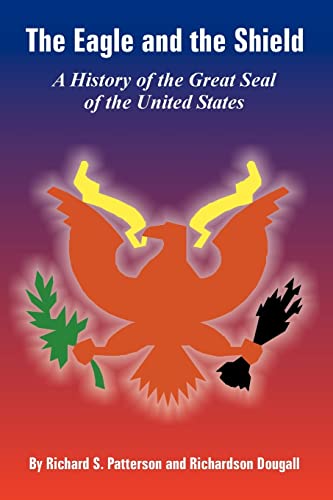
Every book recommended across this series is collected, with a note on what each one is actually good for, on the Top Picks reading list.
The Eye and the Pyramid
The Eye of Providence was a common European artistic device long before 1782, appearing in Renaissance and Baroque Christian art to represent the omniscience of God, frequently within a triangle for the Trinity. It appears in church decoration across Catholic and Protestant Europe. Freemasonry did adopt a similar all-seeing eye emblem, but the documented Masonic usage is generally dated to the later 1790s, after the seal.
Of the design’s actual authors, Barton and Thomson, neither is documented as a Freemason. Franklin was, and his committee’s design was rejected. This is the specific factual point on which the strong version of the claim runs into trouble.
The unfinished pyramid is unusual and Thomson’s explanation of it is brief. The reverse was never cut as a die and has never been used as a seal. Its familiarity is entirely due to its appearance on the one dollar bill from 1935.
What Holds and What Does Not
Freemasonry was genuinely widespread among the American founding generation, and that is not in dispute. Some symbols on the seal do overlap with Masonic emblems, because both drew on a shared eighteenth-century neoclassical and Christian visual vocabulary.
What does not hold is the specific reading of Novus Ordo Seclorum as New World Order, the attribution of the eye to Egyptian Horus rather than to European Providence iconography, and the implication that Masons designed the reverse. The design record names who did.
For the eye’s Egyptian claim, see Osiris and Isis. For obelisks and the same class of argument, see obelisks and monoliths.
