| Episode | MB01 |
|---|---|
| Series | Mystery Babylon, Hour of the Time |
| Host | William Cooper |
| Air date | February 12, 1993 |
| Station | WWCR (shortwave) |
| Chapter title | The Sun of God |
| Transcript length | About 6,600 words |
| Runtime | n/a |
| Listen | Full series audio on archive.org |
What This Episode Covers
This is the first numbered episode of the Mystery Babylon series, aired February 12, 1993, the night after the introductory broadcast MB00: The Dawn of Man. Cooper opens with a roll call of organizations he says are all branches of one ancient tradition: Freemasonry, the Knights Templar, the Knights of Malta, the Rosicrucians, the Prieure de Sion, the Thule Society, Skull and Bones, the Illuminati, and others. According to the broadcast, all of these have been collectively known through the ages as the Mystery Schools. He also states plainly that what follows does not necessarily reflect his own beliefs or those of station WWCR, a disclaimer he repeats across the series.
The episode is structured around two long readings. The first comes from Robert Klark Graham’s The Future of Man, which Cooper uses to present the Mystery Schools’ view of human origins: man as a product of harsh natural selection, in which intelligence, the first knife, and the first spear separated survivors from victims. Graham’s text itself quotes Norman J. Berrill and the geneticist Theodosius Dobzhansky. The passage walks through imagined scenes of early invention: the first nut cracked between two stones, the first cutting edge discovered when a stone broke, the first impaling stick that stopped a predator at night. Cooper interjects throughout, tying the material back to his claim that the religion he is describing believes in evolution rather than divine creation, and adding his own grim aside that the unintelligent of his own day will fare no better than their prehistoric counterparts.
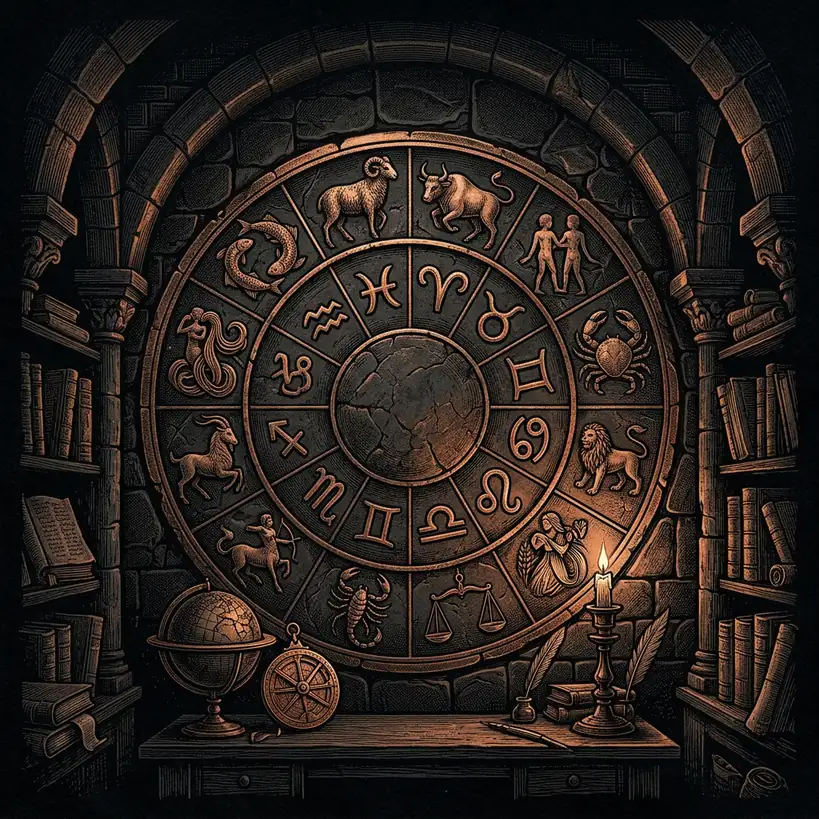
The second and longer reading comes from Jordan Maxwell’s That Old-Time Religion, and it carries the episode’s central argument. Early man’s first enemy was darkness, so the sun became his most trusted friend and the natural symbol of an unseen creator. From this premise the text builds an extended series of wordplays and parallels between solar religion and Christian language: God’s Sun as the light of the world, the risen savior who returns each morning, Horus as the newborn sun whose rising gives us the word horizon, Set as the prince of darkness who kills the sun at sunset, the twelve houses of the zodiac behind the recurring number twelve in scripture, the sun standing still for three days at the winter solstice before being born again on December 25, and the four gospels mirroring the four seasons. The reading also runs through the twelve signs of the zodiac one by one, matching each to a biblical figure or motif: Aries the lamb, Gemini the twins as Cain and Abel or Jacob and Esau, Virgo the virgin as the Madonna, Scorpio the back-biting betrayer as Judas, Pisces the two fishes of the present age. Cooper presents all of this as the doctrine of the Mystery Schools, which he says regard Christianity as a perversion of their older solar faith and hate Christians for it. He stresses that, in the text’s own framing, no ancient people actually believed the sun was God; it served as the visible symbol of an unseen creator.
Along the way Cooper adds his own asides: that the crown of thorns is the corona of the sun and that the Statue of Liberty, a gift he attributes to Masonic France, wears the same solar crown; that the truncated pyramid and all-seeing eye on the United States one dollar bill depict the Eye of Horus above an unfinished pyramid; that the Jews encountered this religion during the Babylonian captivity; and that the Age of Pisces is now ending, with the sun entering Aquarius sometime after 2010, which he links to the New Age movement’s name. He repeatedly tells listeners that he is reporting the beliefs of others, not endorsing them, and urges independent verification. Readers who want the biblical text behind the series title can read our overview of Mystery Babylon in Revelation; the historical claims in this episode are mapped against mainstream scholarship on the Mystery Schools topic hub.
Key Claims Made in This Episode
- Cooper claims Freemasonry, the Templars, the Knights of Malta, the Rosicrucians, Skull and Bones, the Thule Society, and the Illuminati are all branches of one ancient Mystery Religion.
- Cooper claims the Mystery Schools teach that man is a product of evolution and natural selection, not divine creation.
- Cooper claims ancient peoples used the sun as the symbol of the unseen creator, and that Christian language about the Son of God preserves this older sun worship.
- Cooper claims Horus, the newborn sun of Egypt, was pictured as an infant savior more than 3,000 years before Christianity began.
- Cooper claims the astronomers of Babylon divided the sky into twelve houses, the origin of the zodiac and of the recurring number twelve in the Bible.
- Cooper claims the sun stands still for three days at the winter solstice and is born again on December 25, which he presents as the origin of the Christmas date.
- Cooper claims the Jews learned this religion during the Babylonian captivity, reflected in the Passover.
- Cooper claims the Statue of Liberty was given to the United States by Masonic France and wears the solar corona as a crown.
- Cooper claims the world is in the last days of the Age of Pisces and that the sun enters Aquarius sometime after 2010, the source of the term New Age.
- Cooper claims Arthur C. Clarke and Stanley Kubrick are members of the Mystery Schools, citing the films 2001 and its sequel.
Each dated claim is plotted on the Mystery Babylon series timeline.

Sources Cooper Reads From in This Episode
| Source | Status | Where to find it |
|---|---|---|
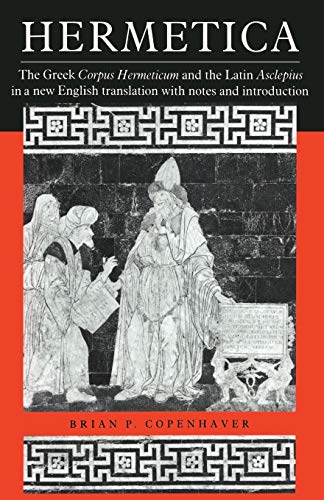
| Robert Klark Graham, The Future of Man (1970) | Under copyright; quote-only | Library copies; see the sources hub |
| Jordan Maxwell, That Old-Time Religion | Under copyright; quote-only | Library copies; see the sources hub |
| Norman J. Berrill, Man’s Emerging Mind (quoted within Graham) | Under copyright; quote-only | Library copies |
| Theodosius Dobzhansky, Evolution, Genetics and Man (quoted within Graham) | Under copyright; quote-only | Library copies |
| The Bible, King James Version (Psalms, Malachi, Matthew, Luke, 1 Peter, Ephesians, Revelation) | Public domain | KJV scans on archive.org |
Notable Quote
“We can now begin to unravel the most ancient, and still the most successful, religion upon the face of this earth. Its success lies in its ability to remain hidden from the rest of the people.” (Cooper, MB01, February 12, 1993)
Frequently Asked Questions
What is Mystery Babylon episode 1 about?
It presents Cooper’s core thesis: that an ancient solar religion underlies the world’s secret societies, and that Christian symbols and language descend from sun worship. The episode is built on long readings from Robert Klark Graham and Jordan Maxwell with Cooper’s running commentary.
When did episode 1 air?
February 12, 1993, on the Hour of the Time over WWCR. It followed the unnumbered introduction The Dawn of Man by one night.
What book does Cooper read from in this episode?
Two books: The Future of Man by Robert Klark Graham, on human evolution, and That Old-Time Religion by Jordan Maxwell, on sun worship and its echoes in biblical language. Maxwell later appeared on the series in person, in episode 23.
Does Cooper say he believes these teachings?
No. He states at the start and repeatedly throughout that the material reflects the beliefs of the Mystery Schools, not his own views or those of WWCR, and identifies himself elsewhere as a Christian. The series frames itself as exposure, not advocacy.
Continue the Series
- Previous episode: MB00: The Dawn of Man
- Next episode: MB02: Antiquities (Egyptian Magic)
- Related topic hub: Mystery Schools and Ancient Religion
- Full index: Mystery Babylon Complete Episode Guide
