| Episode number | MB26 (Part 26 of 42) |
|---|---|
| Original air date | August 11, 1993 |
| Broadcast | Hour of the Time, WWCR shortwave |
| Chapter title | America’s Assignment, Part III |
| Primary texts read on air | America’s Assignment with Destiny by Manly P. Hall (1951) |
| Listen | Stream the series on archive.org |
Episode Summary
Episode 26 aired on August 11, 1993, and continues the multi-part reading from Manly P. Hall’s America’s Assignment with Destiny that Cooper began in episodes 24 and 25. The broadcast falls into two distinct halves. The first works through Hall’s survey of Native American religious practices; the second presents Hall’s theory that the exploration of the Western Hemisphere was organized and timed by a network of Secret Societies operating across continents.
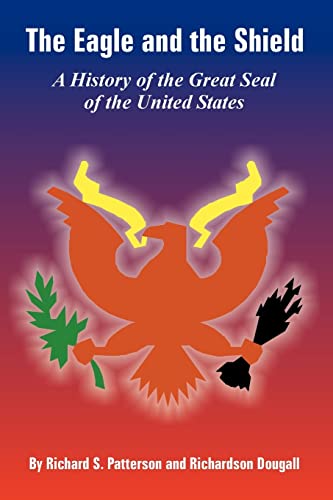
Hall’s account of the Americas opens with the thunderbird, a figure found across Plains Indian traditions. The thunderbird was believed to cause storms by beating its wings and to fire small meteors as arrows. Hall draws a direct parallel between the thunderbird and the phoenix of Asia and North Africa, both creatures associated with initiation, cyclical death, and rebirth. Cooper pauses the reading to note that the phoenix also symbolizes the New World Order rising from the ashes of the old order, and that early drawings of the Great Seal of the United States depicted a phoenix rather than an eagle. This connection between the seal, the phoenix, and esoteric tradition is a recurring motif in the series.
Hall then examines the secret societies of specific tribes. The Algonkin nations organized their religious knowledge into three ascending grades, with the highest closed to all outsiders. Cooper observes that this structure mirrors the three degrees of Blue Lodge Freemasonry. The Ojibway Great Medicine Society, the Midewiwin, admitted both men and women and maintained birchbark charts that a Masonic researcher had compared to the trestle board of a Masonic lodge. The initiation legend of the Midewiwin centers on a hero, Manabozho, who received the rites from a servant of the Good Spirit. Candidates advanced through four degrees, traveling toward the east, a directional pattern Cooper calls familiar to steady listeners of the series.
The most extended ceremonial parallel involves the Seneca nation. Arthur C. Parker, himself a 32nd-degree Mason, witnessed Seneca rites in 1919 and reported the legend of Red Hand, a hero slain by a poisoned arrow who was restored to life when a bear raised him by the strong grip of his paw. Cooper identifies this as the exact ceremony of the raising of the Master Mason in the Third Degree of the Blue Lodge, carried out by the Lion’s Paw grip. Parker’s own words close the episode’s first section: he asked whether the Senecas have not the thread of the legend of Osiris and whether they do not possess an inherent Freemasonry. Cooper endorses both questions as rhetorical admissions.
Cooper introduces the Iroquois leader Deganawida as further evidence. Hall’s text describes Deganawida as born of an immaculate conception, possessing the power to work miracles, and confirmed in his mission by the Great Father, fulfilling every requirement of the adept tradition. The founder of the Inca dynasty, Manco Capac, is presented as an initiate-statesman who established the religion of the sun in eleventh-century Peru, brought a golden falcon identified as a form of the phoenix to the Andes, and combined the offices of priest and king in the Melchizedek pattern of esoteric governance. Cooper interjects that Peru’s experiment in socialized living fails his test of a genuine Utopia precisely because it eventually ended, and that any Utopia built by imperfect men will always fail.
The second half of the episode shifts from anthropology to historical argument. Hall asserts that the Americas were discovered and explored more than a thousand years before the Christian Era, and that the true story was held in the Mystery Schools before passing to the Secret Societies of the medieval world. Plans for developing the Western Hemisphere, he claims, were formulated in Alexandria, Mecca, Delhi, and Lhasa long before most European statesmen knew the continent existed. The explorers who reached the New World were agents of rediscovery executing a master plan, not independent discoverers.
Hall proceeds through a series of specific historical puzzles. The identity of Christopher Columbus is genuinely uncertain: no one knows whether he was an English prince, a Greek nobleman, or a Genoese captain. He left ninety-seven manuscripts and over twenty-five thousand marginalia, an achievement inconsistent with the theory that he was illiterate. He used cryptic signatures resembling Baconian ciphers, wore the plain robe and girdle associated with the Franciscan Order and with other fraternities connected to esoteric tradition, and described the earth as pear-shaped with a protuberance at the top, a description Cooper notes was only confirmed by satellite data centuries later. Columbus raised both the standard of Castile and a banner of his own, a green cross on a white field, when he made his first landfall. Hall asks whether this was a device of the Knights Hospitaler. Cooper answers: of the Knights Templar.
The invisible hand guiding Columbus, Hall argues, was that of the Medici, specifically Lorenzo the Magnificent, whose philosophical school and patronage of Secret Societies opened the most exclusive institutions in Europe to the navigator. Dante is identified as an initiate of the Templars and a friend of Roger Bacon. John Cabot, born Giovanni Caboto in Genoa, visited Mecca, contacted the secret Christian sect of the Johannites, and was pensioned under the name Antonio Cabot through the English merchant Rici D’Americke, details Hall presents as evidence of coordinated management from behind the scenes. The episode closes with Hall’s conclusion: the Great Plan reached the Western Hemisphere through a chain of initiated leaders who built slowly, thinking not of their own days but of the future in which the Great Plan would be fulfilled. Cooper offers no closing commentary; Hall’s words serve as the final statement.
Key Claims Made in This Episode
Documented from the broadcast. The site records these claims; it does not endorse them. Dated claims also appear in the series timeline.
- Cooper claims that early drawings of the Great Seal of the United States depicted a phoenix rather than an eagle, and that the phoenix symbolizes the New World Order rising from the ashes of the old order.
- Cooper claims the secret religious societies of the Algonkin, Ojibway, and Seneca nations were organized on the same principles as Freemasonry, including graded degrees, directional travel, and grip-based raising ceremonies.
- Cooper claims the Seneca legend of Red Hand, in which a bear raises a slain hero by the grip of its paw, is the exact same ceremony as the raising of the Master Mason in the Third Degree of the Blue Lodge.
- Cooper claims Deganawida, the Iroquois leader, was born of an immaculate conception and fulfilled all the requirements of the esoteric adept tradition, including miracle-working and divine confirmation of his mission.
- Cooper claims Manco Capac, founder of the Inca dynasty in the eleventh century AD, established the religion of the sun in Peru and brought a golden falcon, a form of the phoenix, as evidence of the adept doctrine.
- Cooper claims the Americas were discovered and explored more than a thousand years before the Christian Era, and that the Mystery Schools held this knowledge while keeping it from the public.
- Cooper claims Christopher Columbus was an agent of the Secret Societies, used Baconian ciphers in his manuscripts, described the earth as pear-shaped centuries before satellites confirmed it, and planted a Knights Templar banner at his first landfall.
- Cooper claims Lorenzo de’ Medici’s invisible hand opened the institutions of Europe to Columbus and directed the final phase of the exploration project, with Leonardo da Vinci as a faithful agent of the Great Plan.
- Cooper claims John Cabot was a Secret Society operative who visited Mecca and contacted the Johannites, a sect connected to Templar esoteric doctrine.
Primary Sources Cited in This Episode
| Source | Status | Where to find it |
|---|---|---|
| Manly P. Hall, America’s Assignment with Destiny (1951) | Not public domain; read on air at length, treated here under quotation only | Library copies; see our sources hub |
| Jennings C. Wise, The Mystery of Columbus (cited by Hall) | Copyright status uncertain; cited but not read | Search archive.org |
| Grace A. Fendler, New Truths About Columbus (cited by Hall) | Copyright status uncertain; cited but not read | Search archive.org |
| Arthur C. Parker, account of Seneca Midewiwin ceremony (1919, published in ethnological reports) | Public domain if pre-1929; verify edition | Search archive.org |
Notable Quotes
“The truth is that the admiral cannot be explained without reference to the Secret Societies, which were the peculiar custodians of the exact information which he required.”
Manly P. Hall, read by Cooper, MB26, August 11, 1993
“The work, then as always, was in the hands and keeping of a very few initiated leaders. They built slowly and wisely, thinking not of their own days or of their own reputation, but of the future in which the Great Plan would be fulfilled.”
Manly P. Hall, read by Cooper, MB26, August 11, 1993
Historians’ View
The comparison between Indigenous American ceremonial practices and Freemasonry was a recurring theme in nineteenth and early twentieth-century esoteric writing, including Hall’s. Professional anthropologists and historians of religion do not regard the structural similarities Hall identifies as evidence of shared institutional descent; they are more commonly explained through convergent symbolic logic across cultures, or through the interpretive frameworks Hall’s sources brought to their fieldwork. Arthur C. Parker was a genuine ethnologist of Seneca descent and a Freemason, and his published account of the Midewiwin did draw the parallel Cooper cites, but Parker’s scholarly writings contextualize the comparison differently than Hall’s reading implies. The claim that the Great Seal originally depicted a phoenix rather than an eagle is based on ambiguity in the earliest heraldic sketches, not on documentary proof. Most historians of exploration treat Columbus’s identity and motives as genuinely uncertain but do not find evidence of a coordinated Secret Society program behind the voyages. The pear-shaped earth remark is real and appears in Columbus’s account of his third voyage, though its exact meaning and source are debated. We record all claims as broadcast; we do not endorse them.
Frequently Asked Questions
What is Mystery Babylon episode 26 about?
It argues that Native American religious societies were organized on the same principles as the ancient Mystery Schools and Freemasonry, and that the European discovery of the Americas was managed by a network of Secret Societies executing a long-range plan. Cooper reads almost entirely from Manly P. Hall’s America’s Assignment with Destiny, with commentary throughout.
What is the Great Plan Cooper refers to?
Cooper is reading Hall’s phrase. Hall uses it to describe a centuries-long project, allegedly coordinated by esoteric orders across Europe, Asia, and the Near East, to develop the Western Hemisphere as the culminating site of the Mystery Religion’s world program. Cooper endorses Hall’s framing without qualification. The concept is examined across MB24, MB25, and this episode.
What books does Cooper read from in episode 26?
The entire reading is from Manly P. Hall’s America’s Assignment with Destiny (1951). Hall cites several other works within his text, including Jennings C. Wise’s The Mystery of Columbus and Grace Fendler’s New Truths About Columbus, which Cooper names for listeners.
Where can I listen to episode 26?
The complete series is preserved on archive.org. We never host or distribute the audio ourselves; see our content policy.
Continue the Series
- Previous: MB25: America’s Assignment Pt 2
- Next: MB27: Letter About Masonry
- Topic hub: Mystery Schools and Ancient Religion
- Related hub: Freemasonry
- Every dated claim from this episode: Mystery Babylon series timeline
- Full index: Mystery Babylon complete episode guide
- Background on Cooper: Who was William Cooper?
- Books Cooper cited: sources and bibliography
