Freemasonry is the thread William Cooper returned to more often than any other subject in the Mystery Babylon series. Across six broadcasts aired on WWCR between February and August 1993, Cooper argued that the fraternity was not a social club with odd rituals but the modern carrier of an ancient religion he called Mystery Babylon. This page documents how the series treated Freemasonry, episode by episode, which figures Cooper discussed, and which books he read from on air, with links to public domain scans of the primary sources so you can check the material yourself.
A note on framing before anything else. This site documents the claims made in the broadcasts. It does not endorse them. Where Cooper’s account conflicts with mainstream historiography, we say so. For the series as a whole, start with the complete episode guide.
How the series frames Freemasonry
Cooper’s central assertion, repeated throughout the series, was that Freemasonry’s upper degrees preserve the theology of the ancient mystery schools: sun worship, initiation by degrees, and a doctrine concealed from the lower membership. In his telling, the lodge is one link in a chain that runs from the ancient mystery religions through the Knights Templar and the Rosicrucians into the modern era. The series presents this lineage as the explanation for what Cooper called the New World Order.
Cooper was careful, in his own words, to distinguish the average lodge member from the leadership. He claimed most Masons in the lower three degrees were sincere men deliberately kept ignorant of the order’s real purpose, an argument he supported by reading Albert Pike’s own statements about the symbolism of the Blue Degrees. Whether Pike’s florid 1871 prose supports that reading is one of the questions a careful listener has to weigh.
The Freemasonry episodes
MB05: The New World Order and Freemasonry (February 18, 1993)
The first episode devoted squarely to the fraternity. Cooper read at length from A. Ralph Epperson’s 1990 book The New World Order, stacking up quotations from politicians, diplomats, and writers who had used the phrase “new world order” decades before George H. W. Bush. He then connected that political vocabulary to Masonic symbolism: the pyramid, the all-seeing eye, the obelisk. This broadcast also contains one of the series’ most aggressive claims, announced as a promotion for an upcoming lecture: “I will prove to you, beyond any shadow of any doubt, that John F. Kennedy was assassinated by the religion known as Mystery Babylon” (Cooper, MB05, February 18, 1993). The series never retracted that claim, and historians and investigators outside Cooper’s circle have never accepted it.
MB15: Quotes by Freemasons (March 10, 1993)
An episode built almost entirely from quotation. Cooper read statements by Masonic authors, Pike chief among them, and argued the order condemns itself in its own literature. The episode functions as the series’ evidence file: listeners were told to obtain the books and verify the passages. Our sources and bibliography hub lists each text Cooper cited with a link to a scanned original where one exists in the public domain.
The William Morgan interview trilogy: MB20, MB21, and MB22 (May 14 to 18, 1993)
Three consecutive broadcasts, not a retelling of the historical 1826 case but a live, real-time interview with a guest using the pseudonym “William Morgan” — a member of the Citizens Agency for Joint Intelligence and 32nd-degree Scottish Rite Freemason who describes lodge recognition signals, degree structure, and ritual practice firsthand. Cooper explains the pseudonym in MB21: the guest chose the name to invoke the historical William Morgan, the upstate New York man who vanished in September 1826 after announcing he would publish the rituals of the first three Masonic degrees, and whom Cooper says was killed by Masons for breaking his oath. The historical Morgan affair is genuine, well documented history: it triggered a national scandal, criminal trials of Masons in New York, and the rise of the Anti-Masonic Party, the first third party in American politics; mainstream historians agree Morgan was abducted and the scandal devastated American Freemasonry for a generation, though what happened to him after his abduction has never been conclusively established. The full separation of the two, along with sourcing for the 1826 case, is on the William Morgan Affair hub.
MB27: In the Coils of the Coming Conflict (August 17, 1993)
Cooper read a lengthy letter concerning Masonry and its alleged role in coming social conflict, using it to restate the series’ thesis that lodge networks operate as a parallel structure of loyalty inside ordinary institutions.
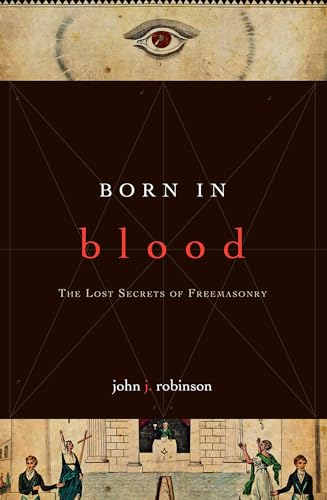
Freemasonry also surfaces constantly outside these six episodes. MB13 on Skull and Bones opens with John J. Robinson’s Born in Blood and its argument for a Templar origin of the Masonic Old Charges, and the secret societies hub traces how the series connects the lodge to other orders.
Key figures in the series’ account
Albert Pike
Pike (1809-1891) was Sovereign Grand Commander of the Scottish Rite’s Southern Jurisdiction and author of Morals and Dogma of the Ancient and Accepted Scottish Rite of Freemasonry (1871), the book Cooper quoted more than any other in the series. Cooper treated Pike’s chapters on the higher degrees as an open confession of Luciferian doctrine. Readers should know two things. First, Morals and Dogma is a real, public domain text and anyone can read the passages Cooper cited in context. Second, the most notorious “Pike quote” in circulation, the so-called Luciferian instructions of July 14, 1889, derives from the writings of Leo Taxil, a French hoaxer who publicly confessed his fabrications in 1897. Where the series leans on Taxil-derived material, this site flags it.
William Morgan
Morgan (circa 1774-1826?) is the historical anchor of the series’ Freemasonry cluster. His book Illustrations of Masonry was published in 1827 after his disappearance and remains the most famous exposure of the Blue Lodge rituals. Cooper read from material covering the Morgan affair across three episodes. The book itself is public domain and linked below.
Primary sources Cooper cited
The series was a reading program as much as a radio show. These are the principal texts behind the Freemasonry episodes:
- Morals and Dogma, Albert Pike, 1871. Public domain. Read the scanned original on archive.org. Cooper’s primary Masonic source throughout the series.
- Illustrations of Masonry, William Morgan, 1827. Public domain. Scanned editions on archive.org. The exposure that preceded Morgan’s disappearance.
- The New World Order, A. Ralph Epperson, 1990. Under copyright; read on air in MB05. Treated here as a quoted source only.
- Born in Blood: The Lost Secrets of Freemasonry, John J. Robinson, 1989. Under copyright; read on air in MB13. Robinson’s Templar-survival hypothesis is a serious popular history argument, though it remains unproven and contested by academic historians of Freemasonry.
The full cross-reference of every episode to every text appears in the sources hub and the episode-to-source map.
The historians’ view
Academic historians of Freemasonry generally trace the fraternity to the operative stonemasons’ lodges of late medieval Scotland and England, transitioning to a gentlemen’s speculative society in the 1600s and formalized with the Grand Lodge of London in 1717. The Templar origin theory Cooper favored, and the claim of an unbroken doctrinal line back to Egypt and Babylon, are not supported by documentary evidence. The Morgan affair, the Anti-Masonic Party, and Pike’s authorship of Morals and Dogma are solid history. The interpretive structure Cooper built on top of them is the part the series asks you to accept, and the part this site documents without endorsing.
Where Freemasonry fits the series’ larger map
In the broadcast’s chronology, Freemasonry inherits from the Templars and the Assassins and runs parallel to the Rose Cross orders, with all lines converging on the modern institutions covered in the secret societies hub. The lineage map diagrams the whole claimed descent, and the series timeline dates every claim in these episodes. For background on the broadcaster himself, see Who Was William Cooper.
Listen to the Freemasonry episodes
All surviving audio is preserved at the Internet Archive. We embed and link the archive.org copies and never host audio ourselves: Mystery Babylon audio collection on archive.org.

Frequently asked questions
Which Mystery Babylon episodes are about Freemasonry?
Six episodes form the core cluster: MB05 (The New World Order and Freemasonry, February 18, 1993), MB15 (Quotes by Freemasons, March 10, 1993), MB20 through MB22 (the William Morgan material, May 1993), and MB27 (In the Coils of the Coming Conflict, August 17, 1993). Freemasonry also figures heavily in MB13 on Skull and Bones.
What book did Bill Cooper quote most about Freemasonry?
Albert Pike’s Morals and Dogma (1871). It is public domain and freely readable on archive.org, which means every passage Cooper read can be checked against the original in context.
Was William Cooper a Freemason?
No. Cooper stated on air that he was not a member of any secret society and presented himself as an outside investigator reading from the order’s own literature.
Did the series claim Freemasons killed John F. Kennedy?
Cooper claimed it, including in MB05, where he promised to prove the Scottish Rite was responsible. No evidence accepted by historians or by any official investigation supports this claim. This site records the claim as part of the broadcast record, nothing more.
Is the famous Albert Pike Lucifer quote real?
The widely circulated “Lucifer is God” instructions attributed to Pike trace back to Leo Taxil, a confessed hoaxer. Pike’s genuine writing in Morals and Dogma does discuss Lucifer as a symbol in one passage, which readers can examine in the public domain scan linked above. The two should not be conflated.
