Three consecutive broadcasts in March 1993 form the Assassins and Templars arc of the Mystery Babylon series. In MB10, MB11, and MB12, William Cooper argued that the medieval Order of Assassins transmitted the ancient mystery religion to the Knights Templar, that the Templars carried it into Europe, and that after their suppression in 1307 they survived in the Freemasons, the pirates of the skull and crossbones, and eventually in institutions like Yale’s Skull and Bones society. This hub documents how the series treated that arc: which episodes aired and when, which sources Cooper read from, the key figures and concepts involved, what primary sources are available, and where mainstream historians agree or disagree with the claims.
As on every page of this site, the framing is documentary. These are the claims the broadcasts made. The site does not endorse them. For the full series, start with the complete episode guide.
How the Series Frames the Templars and Assassins
Cooper’s argument about this arc runs in four steps. First, the Assassins of Alamut were not merely a political murder cult but a nine-degree initiation system structurally identical to what Cooper called the ancient mystery religion. Second, during the Crusades the Knights Templar had sustained contact with the Assassins, and through that contact many Templars were initiated into the Mysteries. Third, the Templars were therefore never a genuinely Christian order but a branch of the Babylonian mystery religion in Christian disguise, functioning also as the world’s first international bankers. Fourth, when Philip IV of France suppressed the order in 1307, the Templars dispersed their treasure and doctrine rather than losing them, and the lineage continued underground into Freemasonry and related orders.
Cooper drew these conclusions primarily from Arkon Daraul’s 1961 book A History of Secret Societies, which he read at length across all three broadcasts, supplemented by the 1835 work of Joseph von Hammer and John J. Robinson’s 1989 Born in Blood. The Daraul text is not public domain and is treated here as a quoted source only. Von Hammer’s 1835 English translation is public domain. The series’ coverage of this arc connects directly to the Freemasonry hub and to the secret societies hub.
The Templars and Assassins Arc: Episodes and Air Dates
MB10: The Assassins (March 1, 1993)
The entire episode is a reading from Daraul’s A History of Secret Societies, with Cooper’s commentary interspersed throughout. It opens in 1092 at the fortress of Alamut, where Hasan ibn Sabbah demonstrates his absolute authority over his followers by ordering a guard to throw himself from the battlements two thousand feet into a torrent below. The episode then goes back to explain how Hasan built that authority, tracing his training in Cairo’s Abode of Learning, a Fatimid institution using nine degrees of initiation whose final level taught that all religion and ethics were fraudulent and that the only authority for action was the chief of the sect. Cooper notes the nine-degree structure matches the York Rite of Freemasonry. The episode covers Hasan’s rise to power at Alamut in 1090, the famous artificial paradise he is alleged to have used to condition young recruits, and the first contacts between the Assassin network and the Crusader armies, ending with the series continuing the following night.
MB11: The Assassins and The Templars (March 2, 1993)
The first half completes the Assassin history, tracing the later Grand Masters at Alamut, the famous declaration of Hasan II in 1163 that all religious bonds were dissolved, and the Mongol destruction of Alamut’s power in the thirteenth century. Cooper argues the cult never died, pointing to the 1866 Bombay court case in which Sir Joseph Arnold ruled that the Aga Khan descended from the fourth Grand Master of Alamut. The second half introduces the Knights Templar through Daraul’s account: nine knights in 1118, the Temple Mount, the patronage of King Baldwin II, and the approval at the Council of Troyes on January 31, 1128. Cooper’s interjections carry the episode’s thesis that the Templars were never Christian but a branch of the Babylonian mystery religion, that they were the first international bankers, and that their black and white Beauseant banner encoded the androgynous god whose symbol survives in the checkered floors of Masonic lodges. He reads von Hammer’s verdict that the Ismailis were the original and the Templars the copy, and presents the three thousand gold pieces paid by the Syrian Assassins to the Templars as a secret organizational allowance rather than tribute.
MB12: The End of the Templars (March 3, 1993)
The arc’s final episode covers the full suppression sequence: the growth of royal and clerical resentment of the order’s wealth and immunities from the mid-thirteenth century, the sealed orders dispatched on September 12, 1307, and the arrest of nearly every Templar in France on the morning of Friday, October 13, 1307. Cooper pauses on that date to argue it is the origin of the Friday the 13th superstition and the first October surprise in recorded history. He reads the Templar initiation ceremony in detail from Daraul, underscoring the receptor’s warning that the candidate sees only the outward shell, and interprets the Head of Baphomet not as an idol but as a representation of intellect and the Luciferian light. The episode closes with the burning of Jacques de Molay in 1314, his alleged curse on the King and the Pope, and Cooper’s claim that Templar treasure, relics, and doctrine were all removed from France before the arrests. He notes that November 22, 1307 was the date Pope Clement V ordered Edward II to arrest the English Templars, then leaves for later episodes the significance of November 22 in subsequent history.
MB13: The Skull and Bones (March 8, 1993) as lateral context
MB13 opens with John J. Robinson’s Born in Blood and its argument that fugitive Templars formed Freemasonry as a mutual-protection society after 1307, then extends the lineage claim to the Skull and Bones society at Yale. It belongs primarily to the secret societies hub, but serves as the direct sequel to the Templars arc and is the primary episode where Cooper draws the line from medieval suppression to a modern American institution.
Key Figures the Series Discusses
Hasan ibn Sabbah (died 1124)
Cooper presents Hasan as the master architect of an initiation system built on psychological control rather than genuine teaching. His method of mutual advancement, in which initiates raised to power then elevated their fellow initiates behind them, is read as a prototype for modern institutional infiltration. The artificial paradise, the degree system with its nine levels of doctrinal unmaking, and the combination of theater and actual murder that produced absolute obedience are the episode’s central claims.
Jacques de Molay (c. 1244-1314)
The last Grand Master of the Knights Templar appears in MB12 as both a historical figure and a symbol. His public recantation on the scaffold, his death in the flames at the Ile des Javiaux in Paris, and the tradition of his dying curse on Philip IV and Pope Clement V are read at length from Daraul. Cooper presents de Molay’s death as the moment from which the surviving Templar network took its revenge through Freemasonry, noting that Scottish Rite degrees are named for his memory.
Joseph von Hammer (1774-1856)
Von Hammer is the nineteenth-century Austrian historian whose 1818 German work on the Assassins, translated into English in 1835 as The History of the Assassins, is one of the arc’s key secondary sources. His verdict that the Ismailis were the original and the Templars the copy is cited in MB11 as the most authoritative single statement of the series’ thesis for the medieval period. Von Hammer’s 1835 English translation is public domain.
Key Concepts
The artificial paradise
The most vivid single scene in the arc. Drawing on Marco Polo’s description and the medieval Arab text The Ancient Art of Imposture, Cooper described a garden of conduits flowing with wine, milk and honey, staffed by young women, accessible only through a hidden passage. Hasan allegedly drugged recruits, brought them into the garden while unconscious, and on their return told them that only death in his service would earn them the key back to paradise. Cooper reads this as the prototype of mind control: producing belief before conditioning, then conditioning before any real doctrine was imparted.
The Beauseant and the checkerboard floor
Cooper argued in MB11 that the Templar battle standard, black and white, was not a heraldic device but a symbol of the androgynous god at the center of the mystery religion. He connected it to the checkered floors of Masonic lodge rooms, presenting the visual similarity as evidence of unbroken doctrinal descent. Academic historians of Freemasonry do not accept this connection.
Friday the 13th and November 22
Two dates that Cooper treats as loaded in MB12. October 13, 1307, is his origin for the Friday the 13th superstition. November 22, 1307, when Clement V’s bull ordering Edward II to arrest English Templars was dated, Cooper holds as relevant to later history, naming the date without elaboration at that point in the series. Listeners familiar with the Kennedy assassination will recognize the implied connection, which Cooper develops in later broadcasts.
Baphomet
The charged figure from the Templar trial records. Cooper reads from Daraul’s reconstruction of the charges, then offers his own interpretation: the Head of Baphomet was not an idol but a representation of the seat of intelligence, the brain, the light, the gift of intellect. He connects the veneration of this figure to what he calls the same Luciferian gift of intellect celebrated in the mystery school degrees from Babylon onward.
Primary Sources Cooper Read From in This Arc
- Arkon Daraul, A History of Secret Societies (1961) — Not public domain; read at length across all three episodes. A note on Daraul: this is the series’ primary source for the Assassin and Templar material, and Cooper reads from it extensively. Because it is under copyright it is treated here as a quoted source only. Its use of Marco Polo and the medieval Arab text on imposture means some of its cited passages derive from much older public domain originals. Available in libraries.
- Joseph von Hammer, The History of the Assassins (1835 English translation) — Public domain. Von Hammer’s work is one of the earliest Western scholarly treatments of the Ismaili order. Search archive.org for scanned editions.
- Thomas Keightley, Secret Societies of the Middle Ages (1837) — Public domain. Cited in MB11 and dismissed by Cooper on the grounds that Keightley himself was a Templar. Search archive.org.
- The Travels of Marco Polo (c. 1300, various translations) — Public domain. The classical description of the Assassin garden. Search archive.org scans.
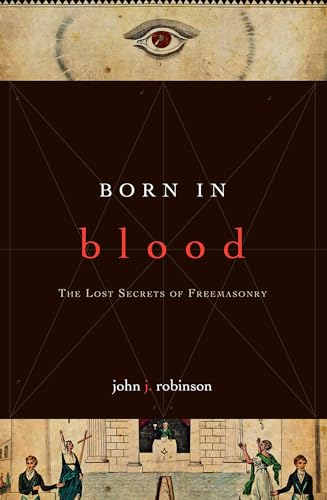
- John J. Robinson, Born in Blood: The Lost Secrets of Freemasonry (1989) — Not public domain; read in MB13 for the Templar origin of Freemasonry thesis. A serious popular history argument, though it remains contested by academic historians of Freemasonry.
The full cross-reference of every source to every episode is in the sources and bibliography hub.
The Historians’ View
Academic historians confirm the broad outlines of the Assassin order and the fortress at Alamut. The Templar founding, the 1307 suppression, and the Daraul-based details of the trial charges and De Molay’s execution are substantially consistent with the historical record. Where the series parts company with scholarship is on the interpretive structure built on top of those facts.
The claim of direct Assassin-to-Templar initiatory transmission is speculative. Documented contacts between the two organizations were primarily diplomatic and military, not ceremonial. The Templar-to-Freemasonry lineage thesis, which Robinson argued at length and Cooper endorsed, is a minority position; most historians of Freemasonry trace the fraternity to Scottish and English stonemason lodges of the late sixteenth and seventeenth centuries. The Prieure de Sion story that Cooper uses to explain the Templar founding appears in documents traceable to a French fabrication campaign in the 1950s, not to medieval records.
Daraul’s book is regarded by academic historians as popular rather than scholarly history, and his reconstruction of the Templar initiation ceremony is based on the torture confessions extracted under Philip IV rather than independent documentation. The charges of Baphomet worship, denial of Christ, and obscene rites are now generally understood by historians as a mixture of politically motivated fabrication and the normal exaggeration that accompanied medieval heresy trials.
Where This Arc Connects to the Rest of the Series
In the broadcast’s chronology, the Templar arc arrives after the mystery schools have established the ancient origin of the doctrine, and before Freemasonry picks it up as the modern carrier. The Rosicrucians are presented as a parallel stream running alongside the Masonic one. The secret societies hub covers the full convergence claim, including Skull and Bones. The lineage map diagrams the complete claimed descent from Alamut to Yale, and the series timeline dates every event Cooper cites in the arc from 1090 through 1314.
Listen to the Templars and Assassins Episodes
All surviving audio is preserved at the Internet Archive: Mystery Babylon audio collection on archive.org. This site embeds and links the archive.org copies and never hosts or distributes the recordings. For Cooper’s biography and the context of the Hour of the Time program, see Who Was William Cooper.

Frequently Asked Questions
Which Mystery Babylon episodes cover the Assassins and Knights Templar?
The core arc is three consecutive episodes: MB10: The Assassins (March 1, 1993), MB11: The Assassins and The Templars (March 2, 1993), and MB12: The End of the Templars (March 3, 1993). MB13: The Skull and Bones (March 8, 1993) extends the lineage claim forward to Freemasonry and Yale.
What book did Bill Cooper read from in the Templars episodes?
All three core episodes are readings from Arkon Daraul’s A History of Secret Societies (1961), with Cooper’s commentary throughout. Daraul’s text draws on Marco Polo and a medieval Arab manual on imposture for the Assassin sections, and on medieval chronicles for the Templar material. Von Hammer’s 1835 history is also cited in MB11.
What did Bill Cooper claim the Knights Templar really were?
Cooper claimed the Templars were never a genuinely Christian order. In his account they were initiated into the ancient mystery religion through contact with the Assassins during the Crusades, making them a medieval carrier of the same Babylonian doctrine he traced from Egypt through Gnosticism. He also claimed they were the world’s first international bankers and that their suppression in 1307 was not their end but their transformation into the underground network that became Freemasonry.
Is the connection between the Assassins and the Knights Templar historically documented?
There was documented diplomatic and military contact between the two organizations during the Crusades, including treaties, tribute arrangements, and joint operations. The claim that Templars were formally initiated into Ismaili esoteric degrees goes beyond what the historical record establishes. Historians treat the relationship as primarily political and military, not as institutional doctrinal transmission. The series presents the initiatory connection as established fact; the site records it as the series’ claim.
Where did the Friday the 13th superstition come from?
Cooper claimed in MB12 that the arrest of nearly every Templar in France on the morning of Friday, October 13, 1307, is the origin of the superstition that Friday the 13th is an unlucky day. This explanation has been widely repeated in popular culture; academic folklorists consider it one among several proposed origins and note that the association of Friday the 13th with bad luck is not well documented in medieval sources, appearing more clearly in nineteenth and twentieth century records.
